Most employers run wellbeing as three disconnected things: a survey that measures, a helpline that supports, and a training day that hopes. MySafeWellbeing runs them as one system, where each part makes the others work.
Understand the conditions. Support the people. Equip the managers.
Short, anonymous pulse surveys measure the six conditions that decades of research link to burnout and engagement: Workload, Control, Reward, Community, Fairness and Values. You see where pressure is concentrated, how it is moving, and which lever is worth pulling first.
Support that only arrives once someone is struggling arrives too late. Every employee gets the whole pathway from day one — a hard week, a development goal, or a genuine clinical need. Nobody has to qualify by deteriorating first.
Five of the six conditions are shaped day to day by line managers — and almost none of them were trained for the conversations that decide it. Instead of another workshop, managers practise the real conversation with a realistic simulated team member, then get a structured debrief and a retry.
Most employee assistance programmes are used by a small fraction of the workforce, because a helpline only helps the people already willing to ring one. Support that gets used has to be worth opening on an ordinary Tuesday — not just on the worst day of the year.
Utilisation isn’t a marketing metric. It’s the difference between a benefit you pay for and a benefit that works.

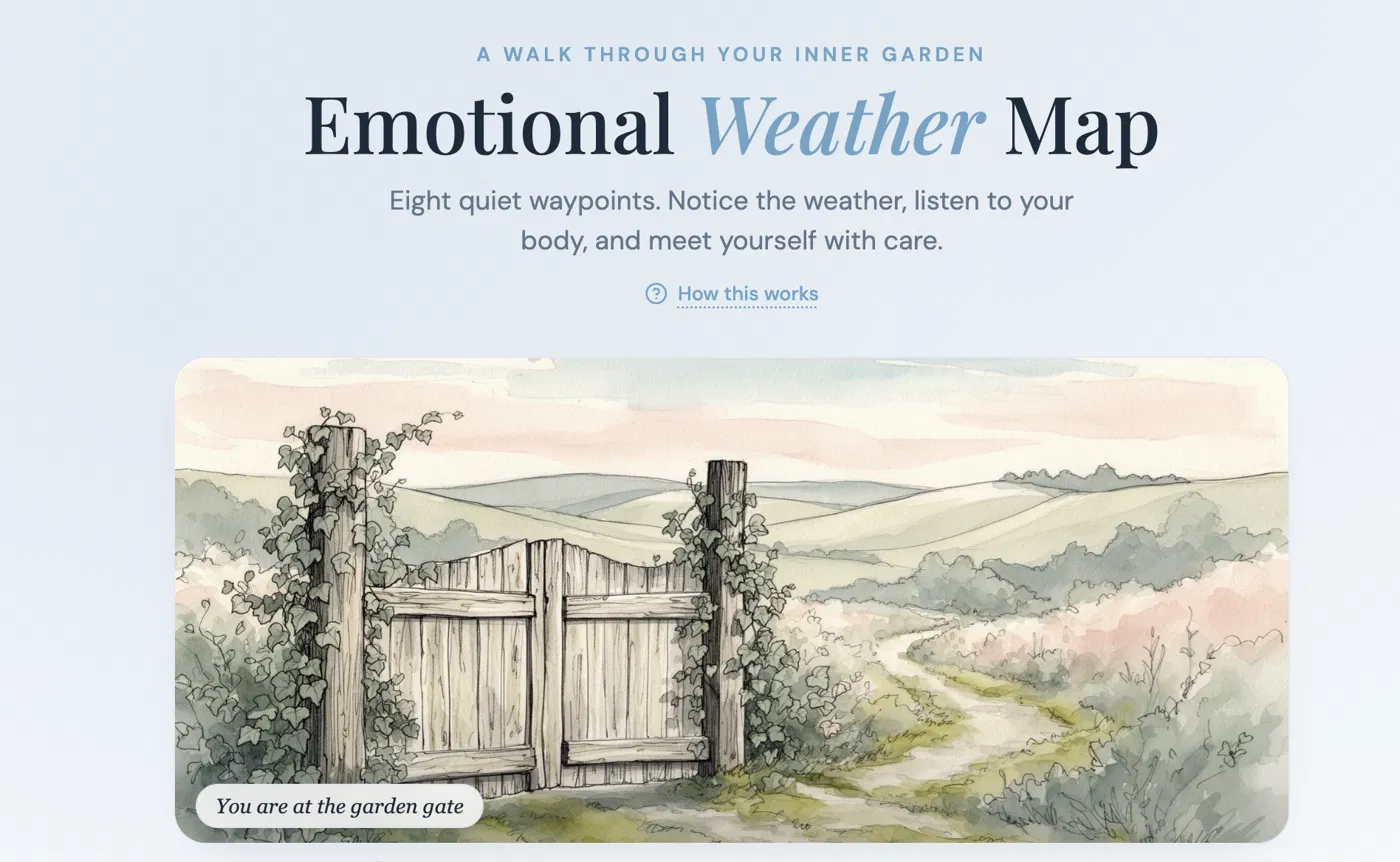
People describe how they are as weather — clear, foggy, stormy, sun after rain — then walk a short path from there. More honest than rating yourself out of ten, and far easier to do daily.

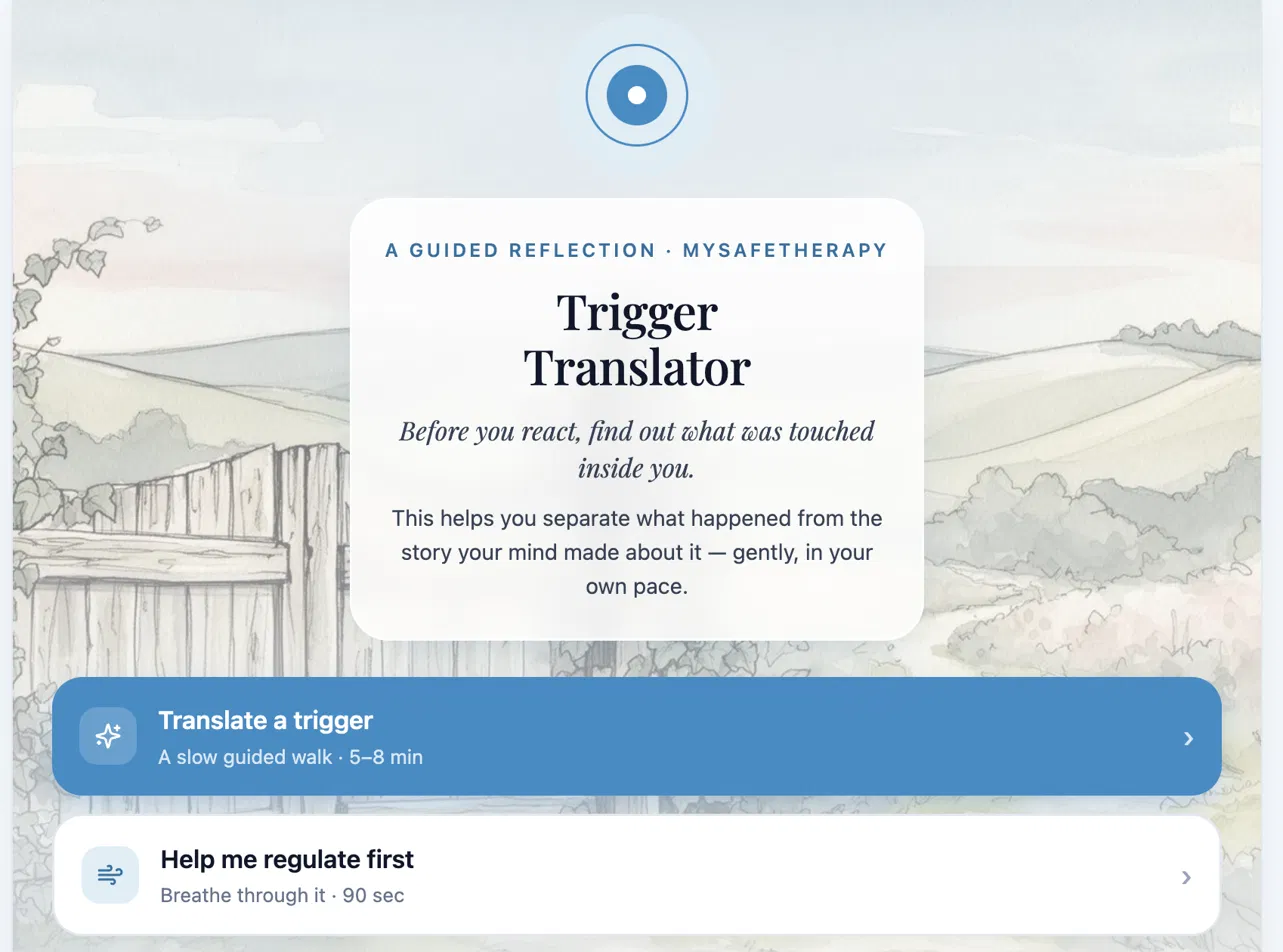
Clinician-written walkthroughs for the moments that matter — understanding a trigger before reacting to it, or testing an anxious “what if” instead of believing it.

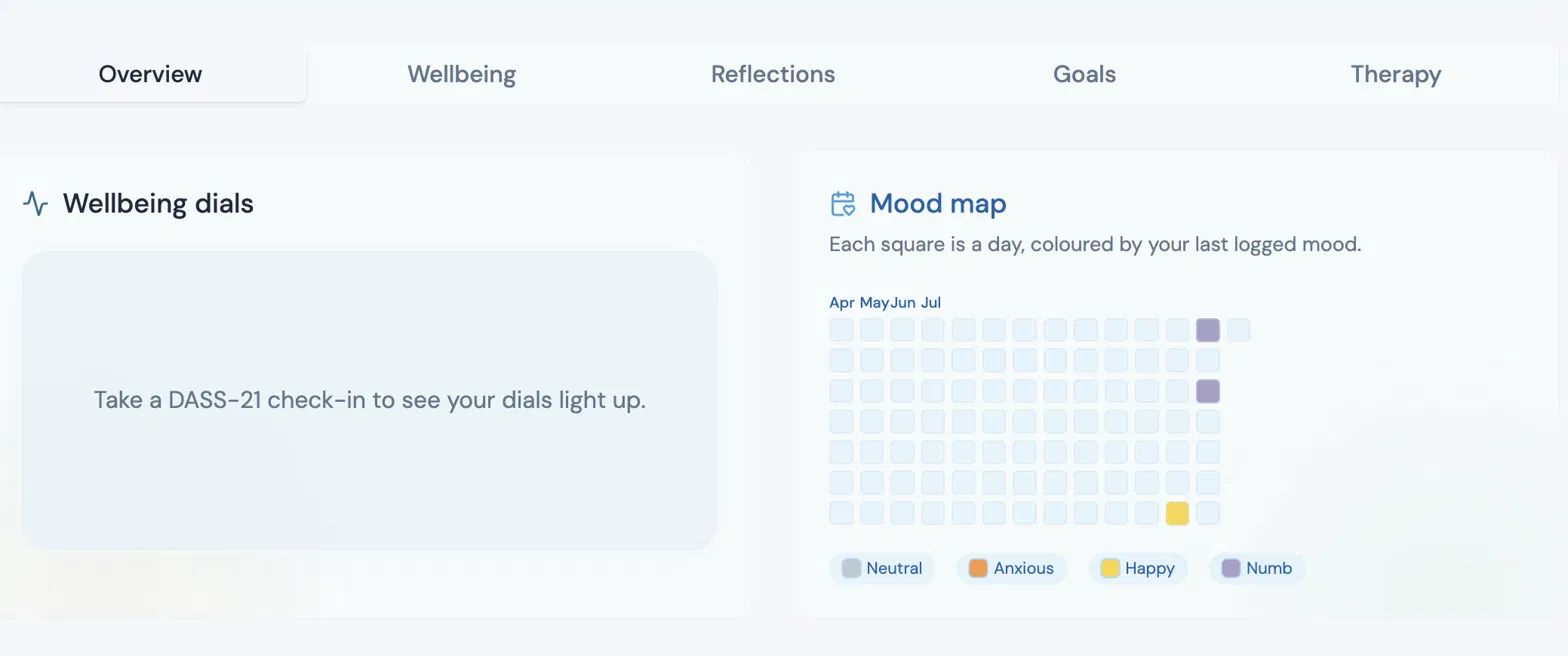
Validated check-ins tracked over time, so someone sees their own trend rather than guessing. Their data, their view — shared with a clinician only if they choose, and never with an employer.
A genuine library written and recorded by clinicians — anxiety, anger, grief, stress and more — alongside a private space to write, with gentle prompts when a blank page feels like too much.
And when someone needs more than self-help, the same platform books them a BACP or UKCP-registered clinician — no waiting list, no GP referral, evenings and weekends available. The step from “a hard week” to “real help” is one tap, not a new process.
Six capabilities, working as one system — each one feeding the next, so insight becomes support and support becomes change.
Which of the six conditions is under strain, and where
How much pressure teams carry — and how fast they come back
From a difficult week to clinical need, without a gate
Managers practise the hard conversation before having it
What to actually do about the condition under strain
Evidence your executive team and auditors both accept
The data is only honest if people trust what happens to it. So the safeguards are built into the platform, not written into a policy nobody reads.
No individual monitoring. No message sentiment mining. No surveillance.
Trust isn’t a feature — it’s the foundation.
The 90-day pilot is not a demo or an assessment exercise — it is the full platform running with your people, ending in a board-ready conditions report and a recommended action plan.